Posts

Showing posts with the label Tagbanua Leader

The Tagbanua Script: Surat et Tagbanua

Image
  Here is a tabulated comparison of the different scripts in the Philippines. Since the author spent time in Palaouan (Palawan), the Tagbanua script (SURAT) was exemplified. On the left column are numbers with the Roman letters and the Tagbanua script on its side. Common words like danum (water), aldaw (day), inum (drink), Tagbanua and even the name Geronimo Torres were translated. Para sa buwan ng wika, eto po ang aming handog. Reference: Alfred Marche. Luzon et Palaouan. Six années de voyages aux Philippines. 1887 Harvard Collection Attribution: Masikampu Ruben C. Joya, 18th Masikampu of the Tagbanua and Indigenous People of Palawan Usba et Masikampo Rikizam M. Joya, MD Usba et Masikampo Ashelon M. Joya Usba et Masikampo Ruben M. Joya, II Maradja et Masikampo Redeem M. Joya
The Tagbanua Gods

Image
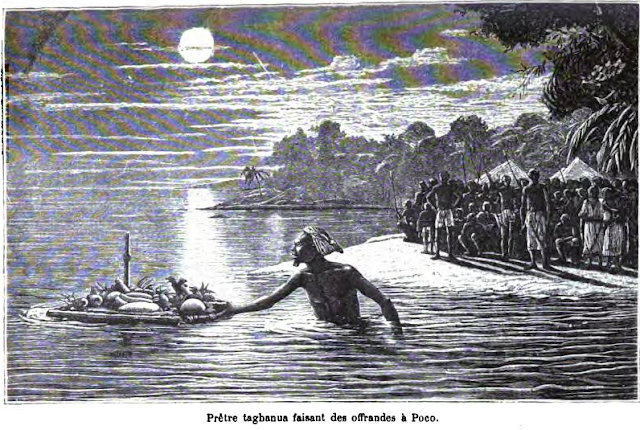
The Tagbanua believe in their native gods. There were four major gods. The first deity was Mangindusa or Nagabacaban- lord of the heavens. Poco/Polo was the god of the sea and deemed a benevolent spirit. Sedumunadoc was the god the earth whose favor was sought in order to have a good harvest. The fourth god was called Tabiacoud who lived in the deep bowels of the earth. Image: A Tagbanua priest making offerings to Poco Reference: Luçon et Palaouan: six années de voyages aux Philippines by Alfred Marche. 1887. Attribution: Masikampo Ruben C. Joya, 18th Masikampu of the Tagbanua and Indigenous People of Palawan Usba et Masikampu Rikizam M. Joya, MD Usba et Masikampu Ashelon M. Joya Maradja et Masikampu Redeem M. Joya

The Masikampo: Supreme Leader of the Tagbanua

Image
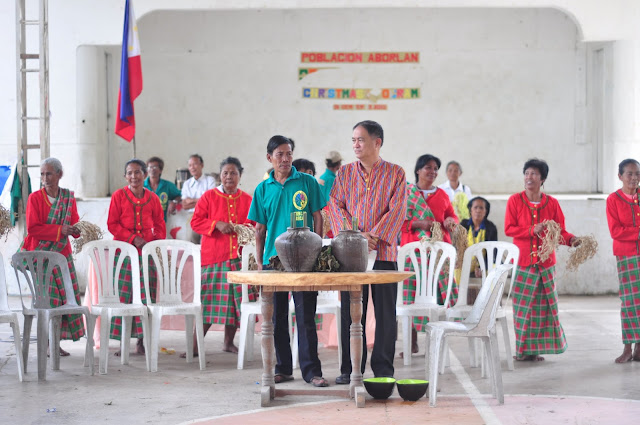
Masikampu Ruben C. Joya fulfilled all these requirements of a Masikampo. 1. One must have a Bloodline of a Masicampo known as Osol . He is the direct descendant of Masikampu Ignacio Joya (14th Masikampu), son of Apo Rafaela Kursud. Only a direct descendant of the Inagawan Masikampu can be chosen by the Usba et Masikampu to lead the tribe. This is the Osol. Anyone who claims to be a Masikampu with out proof of Osol is considered a fraudulent entity. 2. He must be knowledgeable of the customary laws of the Tagbanuas known as Adat . Masikampu Ruben Joya learned the customary laws through his father and Usba et Masikampu. The Adat should not be taken lightly. There is a blessing and a curse if you do not perform your duties as the supreme leader of the Tagbanua. This is one reason why young children are not allowed to be the head of the Tagbanua despite being an Usba et Masikampu. 3. He must be knowledgeable of the history of the Masicampo known as Tuturan . He was taught and educa...

The Legend of Palaesgen: A Tagbanua Story

Image
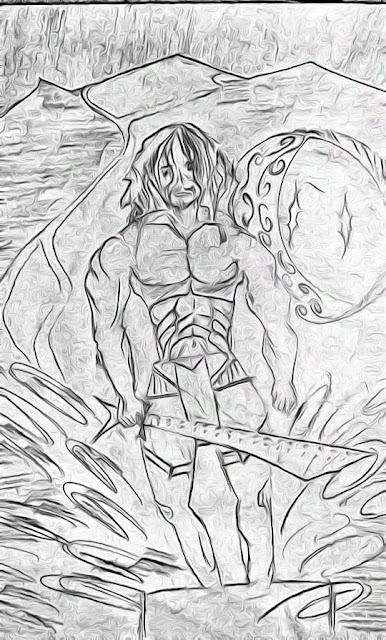
A long time ago, Biarongbarongan, who was a supernatural chief lived at the other side of Iraan river, [where the old agricultural high school was located]. He had two sons, namely, Baybayaren and Palaesgen. Both were married to Iloilo and Tabod, respectively. They were also enchanted. They owned wells with magical flowing water. From the wells, they could demand instantly anything that they asked for. At one time, Biarongbiarongan went for a tournament in a foreign land. After his defeat, he was beheaded and his head was pierced in the plaza. His fierce son, Palaesgen rode his enormous ship with hundreds of his followers to avenge his father’s death. When he was exhausted in his battle, he alighted in a tree and only his sword and shield continued to fight until he was victorious and went home to Aborlan. One afternoon, an ordinary man and woman happened to meet for a romance under Palaesgen’s house. He was angry at the sinful persons, thus he and his family together with ...

Traditional Tagbanua Wedding: Requirements and Process of the Event

Image
The Tagbanua wedding is a multi-step process and here is a summarized, but not exhaustive list of the occasion.  1. Surugiden- The couple should undergo this process with their parents/guardians and at least two (2) Bagerals in attendance. This will enable both parties to investigate and agree that the couple are eligible for marriage. 2. Sanggup- This is the process wherein the families agree on terms of marriage. 3. Surong et kapangasawa- Provision of support including, but not limited to monetary endowment (bandi). 4. Ceremony officiated by Masikampo Ruben Joya- The ceremony is led by the Tagbanua/IP Masikampo. He is trained and licensed to officiate Indigenous People's weddings by virtue of his status as head of the Tagbanua. 5. Da-ton- An offering for a successful marriage usually done by the Manlalambay 6. Tabad- Rice wine drinking as part of the ceremony 7. Sakluban et tapis- The bride and groom are covered in a ceremonial blanket. 8. Mang-mang- Or, pr...

The Tagbanua and Palawano tribes: Why Representation Matters

Image
The Tagbanua and Indigenous People of Southern Palawan can be classified as one of the oldest tribes in the Philippine archipelago. We existed through the years with the guidance of our customary laws and the leadership of our Masikampo. But as years went by, the Tagbanua nation found itself on the fringes of the society. Poverty is rampant and brought a vicious cycle of under-representation in the local and national government. During his time as Masikampo, Ignacio Joya worked hard to connect us with the government; thus our grandparents remembered how life was better in the old days. Now his son, Masikampo Ruben Joya, is the leader of the Indigenous People and continues such legacy that his father left for members of the IP. He has laid out clear policies for education, health and alleviation of poverty. Masikampo Ruben Joya is in talks with the executive and judiciary branch of the Philippine government to make them aware of the Tagbanua's place in the society.  Pictured a...

How To Become A Tagbanwa Masikampo

Image
The Masikampo is the supreme leader of the Tagbanua and the Indigenous People of Palawan. The title and position is inherited and the selection is done only by the Usba e't Masikampo or the princes/nobles of the Masikampo. Here are the requisites to become a Masikampo: 1. Osol      Not everyone can be a Masikampo. One must have the bloodline of a Masikampo.  2. Adat     The Tagbanua is a nation that has a set of customary laws that is being followed to this day. A person must be knowledgeable of these customary laws to be qualified as Masikampo. 3. Tuturan     This requirement basically entails knowing the genealogy and history of the Masikampo. 4. Surugiden      A Masikampo is expected to be trained and interested in jural procedures. This can only be learned through exposure during meetings of the elders and taught by the Masikampo to his son/sons. Such procedures are intricate and involves diplomacy and use o...

History of Aborlan

Image
The political center of Tagbanua tribe is in Aborlan, a town south of Inagawan where the former seat was held until the penal colony expanded. There are multiple stories about how the name of Aborlan came to be, but one that is being held by most tribal members is the one accounted in Dr. Robert Fox's book. The town's name came after Abalan , ?abal , which means "cloth". A report by the late Eulalio Palao dated 1953 accounted this version of the word " abel " or piece of cloth which came from a certain species of tree. Since the Tagbanua and other IPs of Palawan existed before the Spanish colonization, we affirm this origin of the town's name. Identity is important to everyone and knowing our roots, our history, ensures that we have a foundation that will flourish through the ages. Abelnan. Sources: Dr. Robert Fox, Tagbanua Religion and Society National Museum Image: Excerpt from Eulalio Palao, Principal, Aborlan Elementary School, April 21,...

The Indigenous People Of Palawan: Tagbanua Masikampo

Image
The anointing and "lambay" of Masikampo Ruben C. Joya The island of Palawan stands famous for its scenic and serene beaches. International magazines and travel websites consistently ranked Palawan as one of the best in the world. Aside from the natural features of the landscape, the island of Palawan is also known for its people. There is a rich demographic diversity in the island owing to the multiple ethnic tribes calling Palawan their home. The Tagbanua tribe is one of the oldest indigenous tribes thriving in the archipelago. It exists with rich and elaborate culture and traditions which is being practiced especially by tribal members in the Central coast of Palawan. At the helm of the Tagbanua society is the Masikampo (Masicampo). Considered as the highest political leader of the cultural communities of Palawan, the Masikampo works to preserve the cultural integrity and secure the well-being of the province's indigenous people. According to history, the Masikampo...

The Tagbanua Masikampo: A Noble Lineage

Image
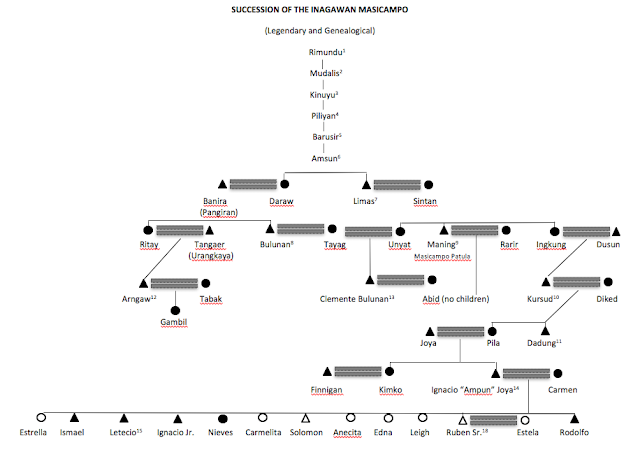
        From the phrase ‘mas et ampu” or “higher than lords” this title is not based upon Spanish term “Maestro de campo” which Dr. Fox states that its origin may at least be one hundred fifty years or older.   The term “mas” means “greater” and “ampu” means “lord” with “ampuan” meaning “Lord” or “Maguindusa”, the Supreme God of the Tagbanuas. This rank is considered as higher than the Datu but lesser than the Sultan. By virtue of the authority of the Masicampo and based on intergenerational knowledge passed to the present successor, the term “Maestro de Campo” is hereby corrected in accordance with the right of cultural integrity.       The Masicampo is a vassal from the Sultan of Burnay (Brunei) who first established the civil hierarchy long before the colonization of Spain in the Philippines. It was a legend that the Masicampo is the son of the Sultan of Brunei by reason of the legend of Inagawan, the seat of t...