Posts

Showing posts with the label the Tagbanua

Traditional Tagbanua Wedding: Requirements and Process of the Event
Image
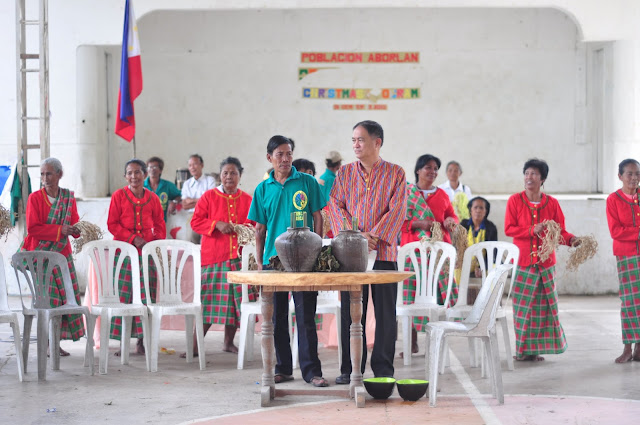
The Tagbanua wedding is a multi-step process and here is a summarized, but not exhaustive list of the occasion.  1. Surugiden- The couple should undergo this process with their parents/guardians and at least two (2) Bagerals in attendance. This will enable both parties to investigate and agree that the couple are eligible for marriage. 2. Sanggup- This is the process wherein the families agree on terms of marriage. 3. Surong et kapangasawa- Provision of support including, but not limited to monetary endowment (bandi). 4. Ceremony officiated by Masikampo Ruben Joya- The ceremony is led by the Tagbanua/IP Masikampo. He is trained and licensed to officiate Indigenous People's weddings by virtue of his status as head of the Tagbanua. 5. Da-ton- An offering for a successful marriage usually done by the Manlalambay 6. Tabad- Rice wine drinking as part of the ceremony 7. Sakluban et tapis- The bride and groom are covered in a ceremonial blanket. 8. Mang-mang- Or, pr...

The Tagbanua: Marriage Traditions

Image
Did you know that in recent years the Tagbanua adhere to the rule of Matrilocality? It occurs when the newly-weds build their house in the maternal residential area of the village (the area of matrilocality is the natal village of the woman). It also means that if the parents of the girl should move to another village, the sons-in-law and their elementary families should follow. The only rationale given for matrilocal residence is that it strengthens the bilateral family; it  would add an economically productive man and woman to the local kinship group of the girl's parents. Matrilocal residence also placed the girl's parents in an effective position for exercising primary authority. Forced separation is one technique used by the girl's parents to enforce their control over their sons-in-law. Polygyny (in which a man has more than one wife) is also restricted by the custom of matrilocal residence as it becomes necessary for men to obtain wives from a single village. ...

The Tagbanua and Palawano tribes: Why Representation Matters

Image
The Tagbanua and Indigenous People of Southern Palawan can be classified as one of the oldest tribes in the Philippine archipelago. We existed through the years with the guidance of our customary laws and the leadership of our Masikampo. But as years went by, the Tagbanua nation found itself on the fringes of the society. Poverty is rampant and brought a vicious cycle of under-representation in the local and national government. During his time as Masikampo, Ignacio Joya worked hard to connect us with the government; thus our grandparents remembered how life was better in the old days. Now his son, Masikampo Ruben Joya, is the leader of the Indigenous People and continues such legacy that his father left for members of the IP. He has laid out clear policies for education, health and alleviation of poverty. Masikampo Ruben Joya is in talks with the executive and judiciary branch of the Philippine government to make them aware of the Tagbanua's place in the society.  Pictured a...

The Tagbanua: Future Untold

Image
What does the future hold for the Tagbanua and the Indigenous people of Palawan? Multiple generations passed and here we stand with our children in a society that has changed by the turn of the century. Our forefathers who used to be gatherers, farmers and fisherfolk were brought up with poor to no formal education. Living up on the boondocks and far from state-sponsored schools, a good number of the population did not have the opportunity to get basic or higher education. The small number of those who were close to the main towns were either too poor to afford the cost of education or stigmatized based on stories of old. How will the story unfold with the new generation of tribal members? Will we take up to the challenge of bringing our families out of poverty by striving to be educated and working to better the tribe? We must.

A Tagbanua Weekend

Image
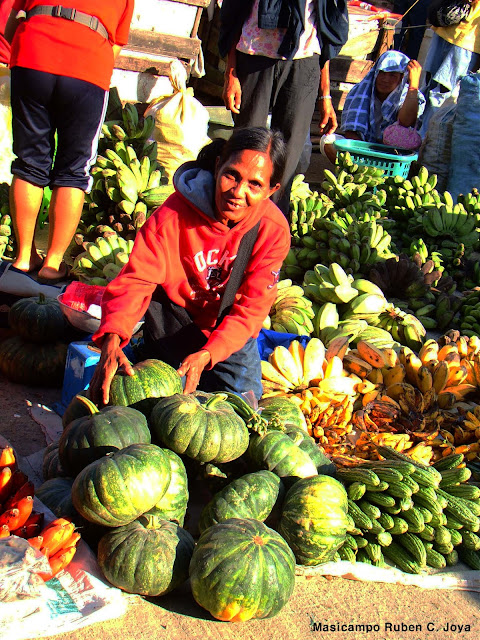
The Tagbanua and Pala'wan tribes are known to be farmers and fishermen. Men and women toil to support the family and the images here show some of the crops they usually sell. Gum resins and upland rice used to be common trades until sanctions were placed against the tribes. Banana, sweet potatoes, seashells, fishes and sting rays are usually sold or bartered for other products deemed indispensable for mountain living.

The Tagbanwa Musical Instruments

Image
Daraet is one of the many festivities celebrated by the Tagbanua and Pala'wan tribes of Southern Palawan in the Philippines. Gongs, cymbals and drums are commonly seen and used. Bamboo flutes, local version of banjo and other percussion instruments are getting rare nowadays, but still around and kept by older members of the tribe.  Decades ago, the drums and gongs used to be big and usually used to announce meetings or events which transpired in the community. Story has it that when the Tagbanua Inagawan Masicampo died, the drumbeats were heard for miles alerting the people of his demise.  Please acknowledge this website and Masicampo Ruben C. Joya when you use the images here. 

The Tagbanua: Babaylan

Image
Image copyright: Masikampo Ruben C. Joya       We met this Babaylan (priestess) on a visit for the yearly Kabaraan festival in Aborlan. The trip by a motor bike was about 20-30 minutes from the main town after which we had to leave the vehicle close to a clearing. We hiked for about 20 minutes through a forested area then crossed a shallow river before reaching the venue.      I remembered calling her "Apo", a vernacular the Tagbanua uses to refer to elderly people. She was petite, close to being emaciated with an opacity in her right eye which I presumed to be senile cataract. Her dress looked well worn, but not shabby or dirty. For how she was dressed up, I would say that she prepared for the occasion.      The small nipa hut where she resided had the bare necessities for a solitary occupation. The wall paneling was made of stripped bamboo as well the floor slats. There was a rolled mat by the corner and a lamp tucked close to the w...

The Tagbanua Political Structure

Image
-A Masicampo is the primary leader among all the traditional leaders and other non Christian cultural communities whose authority extends throughout the mainland Palawan. -Considered as the patriarch of the IPs of Palawan, settling disputes, imposing tribal laws (adat), appointing traditional leaders (bageral), and solemnizing tribal marriages. - It is common belief among the Tagbanuas and Pala’wan of mainland Palawan that there shall be only one legitimate Masicampo of Palawan. To avoid conflicting views to the customary laws. - in case of death of a Masicampo or upon his incapacity, the elders among the clans of the Family with the Bloodline of Masicampo also called as the  Usba e’t Masicampo  will convene for the purpose of choosing among them who will be the next Masicampo. The Masicampo will be chosen by a consensus of the  Usba e’t Masicampo -  the council of the elders of the clan . Women, youngsters and non members of the family are prohibited to ...

The Masikampo

Image
        Palawan is the home of eight cultural minorities Tao’t Bato (ke’ney), Batac, Pala’wan, Molbog, Mapun, Tausug and Panimusan with diversified customs, traditions, idiosyncrasies and lifestyles. Before the arrival of the Spaniards, Palawan was under the dominion of the Sultan of Sulu and Borneo who continued to hold sovereignty over the southern part of Palawan until the 19th century making Aborlan a sultanate of Sulu. A political structure formed the government of the early Tagbanuas. The Sultan was represented by a “Masicampo”, the highest ranking tribal leader or the chieftain. He was chosen from a lineage of “Masicampo”, from a particular bloodline. The whole native populace was under his rule. Everybody ran to him for problem-solving, decision making and many other cases. He also appoint the “saribangsawan” and his panglima, maradja and their assistants. The Tagbanuas have distinct cultural customs and traditions acquired from the people of Sulu and Borneo...

A Position Letter Regarding The Tagbanua and Other Indigenous Tribes of Mainland Palawan

a Position letter regarding The tagbanua and other indigenous tribes of mainland palawan I.                     Cultural History: Anthropological Basis A.)    The festival and ritual practices of the Tagbanua of Aborlan, its implication to education By: Reynaldo M. Yap Jr., 1994 Palawan is the home of eight cultural minorities Tao’t Bato (ke’ney), Batac, Pala’wan, Molbog, Mapun, Tausug and Panimusan with diversified customs, traditions, idiosyncrasies and lifestyles. Before the arrival of the Spaniards Palawan was under the dominion of the Sultan of Sulu and Borneo who continued to hold sovereignty over the southern part of Palawan until the 19 th century making Aborlan a sultanate of Sulu. A political structure formed the government of the early Tagbanuas. The Sultan was represented by a “Masicampo”, the highest ranking tribal leader or the chieftain. He was chosen f...