Posts

Showing posts with the label Tagbanua festivals

The Tagbanua: History of Inagawan
Image
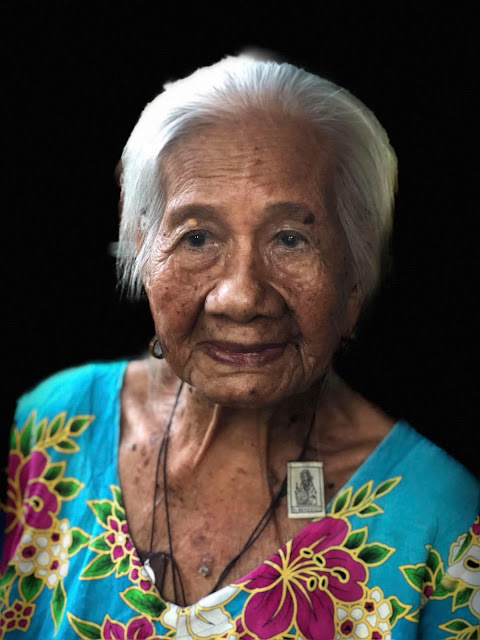
Inagawan is an idyllic locale situated a few miles away from Puerto Princesa City in Palawan. The area used to be the seat of the Tagbanua Masikampo until it was moved to Aborlan. This is the place where Saint Ezequiel Moreno first met and baptized Patula (Manuel/Maning), the ninth Masikampu of the Tagbanua. Due to frequent Moro raids during that time, the Tagbanua used to call it “Riyumpakan” which roughly translates to “trampled on”. There are two classes of Tagbanua reside nts of Inagawan. The Matnoranun (from Matnor river) are called Daya’nun which meant people living on the mountains. They are agricultural people and known to be rich by Tagbanua standards. The Inagawnun or Laut’nun live on the valley and are the more civilized of the two. Inagawan has produced prominent personalities like Senator Ramon Villarosa Mitra and Jose Nolledo. For the Tagbanua, we take pride with the history of our ancestry. We honor and give recognition to our very own- Apo Felisa Sar...
A Tagbanua Short Story: Wali and the Bangat

Image
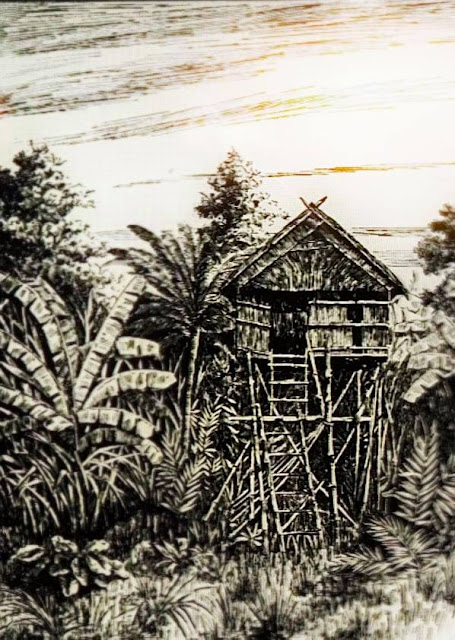
Wali, a hunter from Tigman, was once lost in the forest for seven days and nights. He found the place at the head of the Maasin River where there were countless pigs. As he wandered there, he saw some huge houses with hundreds of rooms. These houses had roofs but no floors. When he saw the huge houses he was afraid. But he said to himself, I will go there even it is the place of the damdam [an evil spirit] for I am too tired to conti nue. As he approached one of the houses he met a very old man. It was a panya’an, the leader of the pigs, named li’iyan kat baga. The old man said to him: “Why have you come to my house?” Wali replied: “I am lost.” The old man then told him to enter one of the houses. After he had entered they chewed betel and Wali was given food. But the rice was soft-cooked with the chaff. When the meal was over the old man told Wali not to leave as his children were coming. Late that afternoon Wali saw thousands of small pigs approaching. They all dove into ...

The Tagbanua and Palawano tribes: Why Representation Matters

Image
The Tagbanua and Indigenous People of Southern Palawan can be classified as one of the oldest tribes in the Philippine archipelago. We existed through the years with the guidance of our customary laws and the leadership of our Masikampo. But as years went by, the Tagbanua nation found itself on the fringes of the society. Poverty is rampant and brought a vicious cycle of under-representation in the local and national government. During his time as Masikampo, Ignacio Joya worked hard to connect us with the government; thus our grandparents remembered how life was better in the old days. Now his son, Masikampo Ruben Joya, is the leader of the Indigenous People and continues such legacy that his father left for members of the IP. He has laid out clear policies for education, health and alleviation of poverty. Masikampo Ruben Joya is in talks with the executive and judiciary branch of the Philippine government to make them aware of the Tagbanua's place in the society.  Pictured a...

The Tagbanua Tribe

Image
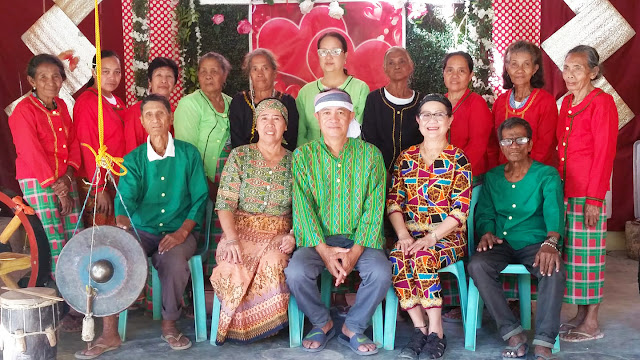
Seated L-R: Orancaya Rodenio Saco, Ba'e Estela M. Joya, Masikampo Ruben C. Joya, Usba e't Masikampo Leah Joya The Tagbanua today. They stick to "ugali," tradition, and the moral rules of "adat," customary law. Magellan's secretary, Pigafetta, observed the practice of bl ood brotherhood ritual in 1521 just as I did myself in 2009. The chief is named Masicampo. On the picture, he appears with his wife. Her function as the ba'e has even been recorded in early Spanish logs. So this is a pre-colonial cultural tradition still very much alive in the southern Philippines. It has many affinities with lifeways in other parts of Southeast Asia, above all, with Borneo. The lady on the right hand flank of the second row, Dominica, is a chief dancer. She has played an important role in my project, above all, in the translation of ritual speech. A Palawan collection in the Oslo University Museum of Cultural History now holds most of the material culture items ...

The Indigenous People Of Palawan: Tagbanua Masikampo

Image
The anointing and "lambay" of Masikampo Ruben C. Joya The island of Palawan stands famous for its scenic and serene beaches. International magazines and travel websites consistently ranked Palawan as one of the best in the world. Aside from the natural features of the landscape, the island of Palawan is also known for its people. There is a rich demographic diversity in the island owing to the multiple ethnic tribes calling Palawan their home. The Tagbanua tribe is one of the oldest indigenous tribes thriving in the archipelago. It exists with rich and elaborate culture and traditions which is being practiced especially by tribal members in the Central coast of Palawan. At the helm of the Tagbanua society is the Masikampo (Masicampo). Considered as the highest political leader of the cultural communities of Palawan, the Masikampo works to preserve the cultural integrity and secure the well-being of the province's indigenous people. According to history, the Masikampo...

The Tagbanua Matriarchs

Image
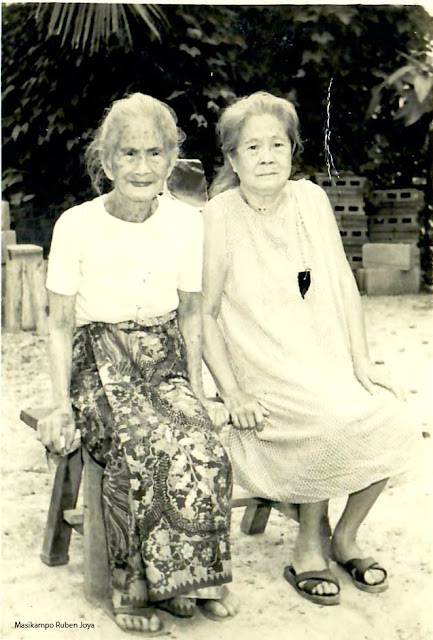
The towns of Aborlan and Inagawan are tied to the Joya Family. History has shown how the Masikampo lineage flourished even as the society changed through years of colonization. The Kursud family descendants sustained the Tagbanua heritage amidst the grueling challenges posed by modernization and conflicts of interest within the family. In celebration of International Women's Day, we honor the matriarchs of the Tagbanua and Pala'wan tribes. Pictured above is the late Rafaela "Apo Pila"Kursud Joya and her daughter Quintera "Apo Kimko" Joya. Apo Pila was of mixed Pala'wan and Tagbanua heritage. Her father was the respected Masikampo Kursud who married a Pala'wan princess from the influential Impot family of Malatgao. Rafaela Kursud was a beloved person in Aborlan and donated a parcel of her land to a church at that time. Although not as famous as her mother, Quintera "Apo Kimko" Joya paved a way for the education of the Tagbanua through her...
Image
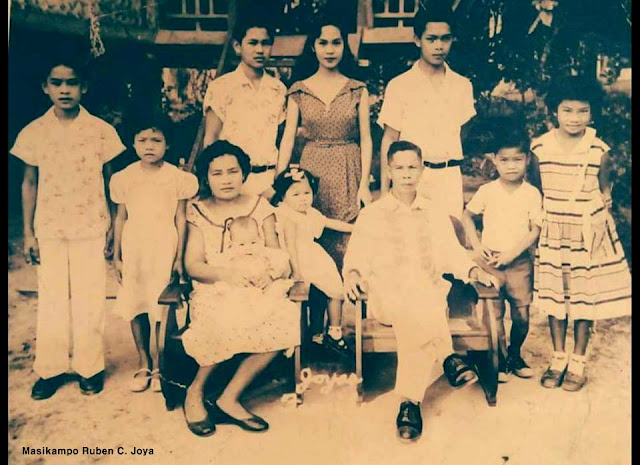
The Joya family stands as one of the surviving noble lines of the Tagbanua as direct descendants of the Masikampo lineage. Members of the family remain in Aborlan connected with the indigenous peoples of Southern Palawan. The late Ignacio "Ampun" Joya was the first born of Rafaela "Apo Pila" Cursod and Bantol Joya . He had a younger sister Quintera "Kimko" Joya who was married to the renowned Thomasite teacher John H. Finnigan . Aside from being the leader of the tribes, Ampun Joya was a teacher, a rancher and served as the town Mayor of Aborlan. He married Carmen Cojamco , a mixed Cuyuno-Tagbanwa, from Inagawan. They had 12 children and numerous grandchildren. The family lived in a place called "Kalampisaw"- a hilly area by the center of the town. Masikampo Ampun Joya donated lands to build the old municipal building and the Aborlan Catholic Church.

The Tagbanua Nobles: Masikampu Ignacio Joya

Image
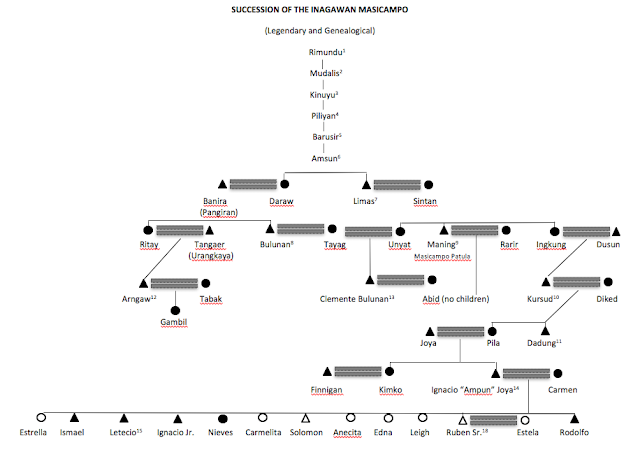
Masikampu Ignacio Joya (the 14 th Masikampu) who was considered as the environmental protector of the ancient lands and sacred sites of Palawan, had the title MASIKAMPU or the Master of the Camp ( Antropologist Harold Olofson ); the Tagbanuas, however, quoted it for “Mas it Ampu” or higher than Lords ( Ancient Syllabaries ). This indicates why the Masikampu seats as the highest titular head of the earliest form of government known in the province. All affairs, even those of the past, present and future manifestations of the culture of Palawan must be with the consent and authority of the Masikampu .   Ampun, who was the eldest grandson of Kursud, was treated by his grandfather as his own son. He was   also trained to become a Masikampu as he did with his sons. Since Ampun did not have a real father, Kursud has become his paternal figure as he also lives with him. Relatively, Ampun, was only younger by one year than Emilio, the youngest son of Kursud with...

The Tagbanua Masikampo: A Noble Lineage

Image
        From the phrase ‘mas et ampu” or “higher than lords” this title is not based upon Spanish term “Maestro de campo” which Dr. Fox states that its origin may at least be one hundred fifty years or older.   The term “mas” means “greater” and “ampu” means “lord” with “ampuan” meaning “Lord” or “Maguindusa”, the Supreme God of the Tagbanuas. This rank is considered as higher than the Datu but lesser than the Sultan. By virtue of the authority of the Masicampo and based on intergenerational knowledge passed to the present successor, the term “Maestro de Campo” is hereby corrected in accordance with the right of cultural integrity.       The Masicampo is a vassal from the Sultan of Burnay (Brunei) who first established the civil hierarchy long before the colonization of Spain in the Philippines. It was a legend that the Masicampo is the son of the Sultan of Brunei by reason of the legend of Inagawan, the seat of t...