Posts

Masicampo Ruben C. Joya: Titular Head of the Tagbanua Nation

Image
  Masicampo Ruben C. Joya, 18th annointed Masikampo of the Tagbanua and Indigenous People of Palawan together with his son, Usba et Masikampo Ashelon M. Joya and Bagerals or Nobles of the Tagbanua and Pala'wan Masikampu Ruben C. Joya fulfilled all these requirements of a Masikampo. 1. One must have a Bloodline of a Masicampo known as Osol. He is the direct descendant of Masikampu Ignacio Joya (14th Masikampu), son of Apo Rafaela Kursud. Only a direct descendant of the Inagawan Masikampu can be chosen by the Usba et Masikampu to lead the tribe. This is the Osol. Anyone who claims to be a Masikampu without proof of Osol is considered a fraudulent entity. 2. He must be knowledgeable of the customary laws of the Tagbanuas known as Adat. Masikampu Ruben Joya learned the customary laws through his father and Usba et Masikampu. The Adat should not be taken lightly. There is a blessing and a curse if you do not perform your duties as the supreme leader of the Tagbanua. This is one reason w...

The Tagbanua Dance: Kendar

Image
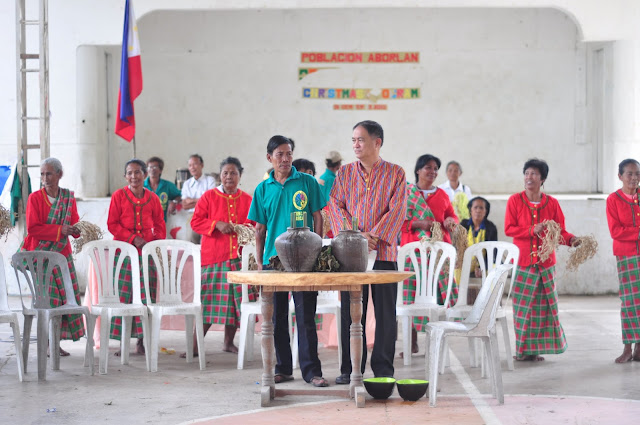
  There are many Tagbanua dances but we generally call it KENDAR. Depending on the occasion or ritual, the Tagbanua has a varied repertoire of dances. Attribution: Masicampo Ruben C. Joya Usba et Masikampo Rikizam M. Joya, MD Usba et Masikampo Ashelon M. Joya Usba et Masikampo Ruben M. Joya, II Maradja et Masikampo Redeem M. Joya Location: Aborlan, Palawan Philippines

The Tagbanua Musical Instruments: Babandil

Image
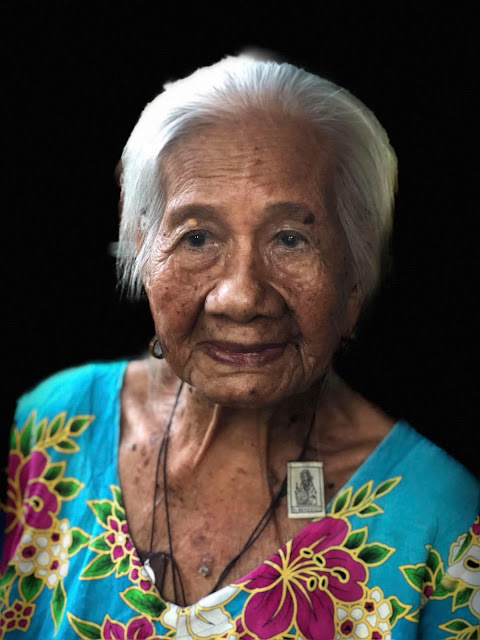
  A Tagbanua woman with a babandil- a narrow-rimmed gong that is often used during dances and rituals. Image: Minan Ehing Location: Aborlan, Palawan Philippines Attribution: Masicampo Ruben C. Joya Usba et Masikampo Rikizam M. Joya, MD Usba et Masikampo Ashelon M. Joya Usba et Masikampo Ruben M. Joya, II Maradja et Masikampo Redeem M. Joya

The Tagbanua People of Palawan: YouTube

Image
  The Tagbanua people of Palawan by H. Otley Beyer. Please subscribe on our YouTube channel.

The Tagbanua YouTube Channel

Image
The Tagbanua has a YouTube channel. Please support and subscribe.

Tagbanua Surat Workshop

Image
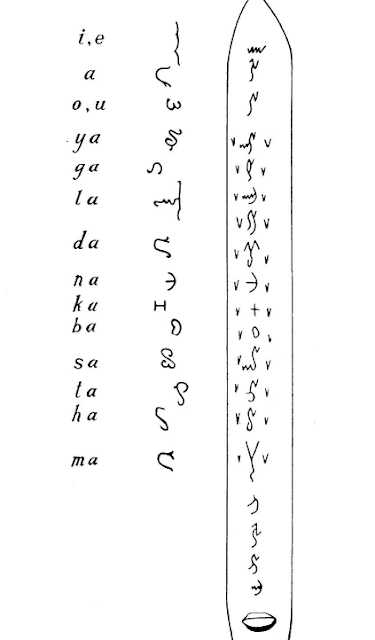
  The Tagbanua script (SURAT) preserved some of the Hindu ancient writing. It is written in vertical columns reading from top to bottom and the columns following in order from right to left. The inscriptions consists of incisions in the surface of strips of bamboo. In the picture, the one on the right is the modern Tagbanua script. The middle shows the Tagalog script and the left image shows the value of the letters in Roman characters. Masikampu Ignacio "Ampun' Cursod Joya, the 14th Masikampu of the Tagbanua and IPs of Palawan, used to write this way. Reference: Peoples of the Philippines by Albert Louis Kroeber, 1876-1960. Publication date: 1919. Courtesy of University of Michigan. Attribution: Masikampo Ruben C. Joya, 18th Masikampo of the Tagbanua and IPs of Palawan Usba et Masikampo Rikizam M. Joya, MD Usba et Masikampo Ashelon M. Joya Usba et Masikampo Ruben M. Joya, II Maradja et Masikampo Redeem M. Joya

The Tagbanua Script: Surat et Tagbanua

Image
  Here is a tabulated comparison of the different scripts in the Philippines. Since the author spent time in Palaouan (Palawan), the Tagbanua script (SURAT) was exemplified. On the left column are numbers with the Roman letters and the Tagbanua script on its side. Common words like danum (water), aldaw (day), inum (drink), Tagbanua and even the name Geronimo Torres were translated. Para sa buwan ng wika, eto po ang aming handog. Reference: Alfred Marche. Luzon et Palaouan. Six années de voyages aux Philippines. 1887 Harvard Collection Attribution: Masikampu Ruben C. Joya, 18th Masikampu of the Tagbanua and Indigenous People of Palawan Usba et Masikampo Rikizam M. Joya, MD Usba et Masikampo Ashelon M. Joya Usba et Masikampo Ruben M. Joya, II Maradja et Masikampo Redeem M. Joya

The Tagbanua Script: Surat et Tagbanua

Image
  The Tagbanua script (SURAT) preserved some of the Hindu ancient writing. It is written in vertical columns reading from top to bottom and the columns following in order from right to left. The inscriptions consists of incisions in the surface of strips of bamboo. In the picture, the one on the right is the modern Tagbanua script. The middle shows the Tagalog script and the left image shows the value of the letters in Roman characters. Masikampu Ignacio "Ampun' Cursod Joya, the 14th Masikampu of the Tagbanua and IPs of Palawan, used to write this way. Reference: Peoples of the Philippines by Albert Louis Kroeber, 1876-1960. Publication date: 1919. Courtesy of University of Michigan. Attribution: Masikampo Ruben C. Joya, 18th Masikampo of the Tagbanua and IPs of Palawan Usba et Masikampo Rikizam M. Joya, MD Usba et Masikampo Ashelon M. Joya Usba et Masikampo Ruben M. Joya, II Maradja et Masikampo Redeem M. Joya

The Tagbanua: Black Teeth

Image
  In the old days, the Tagbanua men and women would file and blacken their teeth. The upper and lower incisors were filed with a stone called u'urutan. The occluding surface would be filed to even them then the facial side to make it concave. The patient bit on a stick of wood during the procedure. After filing, the leaves of a vine called migay were rubbed on the face of the teeth. The black residue used to paint the teeth was made from chopped leaves of kabar and tambilikan- boiled until it turns black. The teeth were painted twice a year. Teeth blackening was supposed to protect the teeth and make it healthier. This custom was lost in the East Coast when the Christians came and eventually the Apuraw'non Tagbanuas stopped doing it. Teeth blackening (Ohaguro) is a custom used by the Japanese during the Meiji area. People from Southeast Asia and Oceania still practices it. Reference: Religion and Society Among the Tagbanwa by Dr. Robert Fox, 1982. Attribution: Masikampo Ruben C...

The Tagbanua Gods

Image
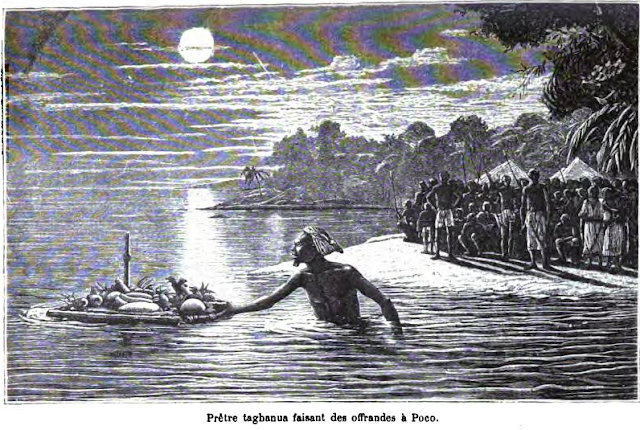
The Tagbanua believe in their native gods. There were four major gods. The first deity was Mangindusa or Nagabacaban- lord of the heavens. Poco/Polo was the god of the sea and deemed a benevolent spirit. Sedumunadoc was the god the earth whose favor was sought in order to have a good harvest. The fourth god was called Tabiacoud who lived in the deep bowels of the earth. Image: A Tagbanua priest making offerings to Poco Reference: Luçon et Palaouan: six années de voyages aux Philippines by Alfred Marche. 1887. Attribution: Masikampo Ruben C. Joya, 18th Masikampu of the Tagbanua and Indigenous People of Palawan Usba et Masikampu Rikizam M. Joya, MD Usba et Masikampu Ashelon M. Joya Maradja et Masikampu Redeem M. Joya

The Tagbanua: History of Inagawan

Image
Inagawan is an idyllic locale situated a few miles away from Puerto Princesa City in Palawan. The area used to be the seat of the Tagbanua Masikampo until it was moved to Aborlan. This is the place where Saint Ezequiel Moreno first met and baptized Patula (Manuel/Maning), the ninth Masikampu of the Tagbanua. Due to frequent Moro raids during that time, the Tagbanua used to call it “Riyumpakan” which roughly translates to “trampled on”. There are two classes of Tagbanua reside nts of Inagawan. The Matnoranun (from Matnor river) are called Daya’nun which meant people living on the mountains. They are agricultural people and known to be rich by Tagbanua standards. The Inagawnun or Laut’nun live on the valley and are the more civilized of the two. Inagawan has produced prominent personalities like Senator Ramon Villarosa Mitra and Jose Nolledo. For the Tagbanua, we take pride with the history of our ancestry. We honor and give recognition to our very own- Apo Felisa Sar...

The Masikampo: Supreme Leader of the Tagbanua

Image
Masikampu Ruben C. Joya fulfilled all these requirements of a Masikampo. 1. One must have a Bloodline of a Masicampo known as Osol . He is the direct descendant of Masikampu Ignacio Joya (14th Masikampu), son of Apo Rafaela Kursud. Only a direct descendant of the Inagawan Masikampu can be chosen by the Usba et Masikampu to lead the tribe. This is the Osol. Anyone who claims to be a Masikampu with out proof of Osol is considered a fraudulent entity. 2. He must be knowledgeable of the customary laws of the Tagbanuas known as Adat . Masikampu Ruben Joya learned the customary laws through his father and Usba et Masikampu. The Adat should not be taken lightly. There is a blessing and a curse if you do not perform your duties as the supreme leader of the Tagbanua. This is one reason why young children are not allowed to be the head of the Tagbanua despite being an Usba et Masikampu. 3. He must be knowledgeable of the history of the Masicampo known as Tuturan . He was taught and educa...

A Tagbanua Short Story: Wali and the Bangat

Image
Wali, a hunter from Tigman, was once lost in the forest for seven days and nights. He found the place at the head of the Maasin River where there were countless pigs. As he wandered there, he saw some huge houses with hundreds of rooms. These houses had roofs but no floors. When he saw the huge houses he was afraid. But he said to himself, I will go there even it is the place of the damdam [an evil spirit] for I am too tired to conti nue. As he approached one of the houses he met a very old man. It was a panya’an, the leader of the pigs, named li’iyan kat baga. The old man said to him: “Why have you come to my house?” Wali replied: “I am lost.” The old man then told him to enter one of the houses. After he had entered they chewed betel and Wali was given food. But the rice was soft-cooked with the chaff. When the meal was over the old man told Wali not to leave as his children were coming. Late that afternoon Wali saw thousands of small pigs approaching. They all dove into ...

The Tagbanua Stories: The Suday

Image
Countless suday (a human-like spirit) are said to live in the sea and to swarm along the shores at night. The Tagbanuwa state that it is unsafe to sleep on the beach at night, particularly alone. These spirits are said to gather by the hundreds around the sleeper and to scratch their fingernails up and down his body. Then they stab the sleeper in the belly with their foot-long thumbnails.  (Robert B. Fox [Tagbanuwa Religion and Society] page 170) credit to the Office of Masicampo Ruben C. Joya Sr. [special thanks to Director Jeremy Barnes of the Philippine National Museum] portrayed image attributed to  https://beautilation.tumblr.com/post/31992015613

The Legend of Palaesgen: A Tagbanua Story

Image
A long time ago, Biarongbarongan, who was a supernatural chief lived at the other side of Iraan river, [where the old agricultural high school was located]. He had two sons, namely, Baybayaren and Palaesgen. Both were married to Iloilo and Tabod, respectively. They were also enchanted. They owned wells with magical flowing water. From the wells, they could demand instantly anything that they asked for. At one time, Biarongbiarongan went for a tournament in a foreign land. After his defeat, he was beheaded and his head was pierced in the plaza. His fierce son, Palaesgen rode his enormous ship with hundreds of his followers to avenge his father’s death. When he was exhausted in his battle, he alighted in a tree and only his sword and shield continued to fight until he was victorious and went home to Aborlan. One afternoon, an ordinary man and woman happened to meet for a romance under Palaesgen’s house. He was angry at the sinful persons, thus he and his family together with ...

Traditional Tagbanua Wedding: Requirements and Process of the Event

Image
The Tagbanua wedding is a multi-step process and here is a summarized, but not exhaustive list of the occasion.  1. Surugiden- The couple should undergo this process with their parents/guardians and at least two (2) Bagerals in attendance. This will enable both parties to investigate and agree that the couple are eligible for marriage. 2. Sanggup- This is the process wherein the families agree on terms of marriage. 3. Surong et kapangasawa- Provision of support including, but not limited to monetary endowment (bandi). 4. Ceremony officiated by Masikampo Ruben Joya- The ceremony is led by the Tagbanua/IP Masikampo. He is trained and licensed to officiate Indigenous People's weddings by virtue of his status as head of the Tagbanua. 5. Da-ton- An offering for a successful marriage usually done by the Manlalambay 6. Tabad- Rice wine drinking as part of the ceremony 7. Sakluban et tapis- The bride and groom are covered in a ceremonial blanket. 8. Mang-mang- Or, pr...

The Tagbanua: Marriage Traditions

Image
Did you know that in recent years the Tagbanua adhere to the rule of Matrilocality? It occurs when the newly-weds build their house in the maternal residential area of the village (the area of matrilocality is the natal village of the woman). It also means that if the parents of the girl should move to another village, the sons-in-law and their elementary families should follow. The only rationale given for matrilocal residence is that it strengthens the bilateral family; it  would add an economically productive man and woman to the local kinship group of the girl's parents. Matrilocal residence also placed the girl's parents in an effective position for exercising primary authority. Forced separation is one technique used by the girl's parents to enforce their control over their sons-in-law. Polygyny (in which a man has more than one wife) is also restricted by the custom of matrilocal residence as it becomes necessary for men to obtain wives from a single village. ...

The Tagbanua and Palawano tribes: Why Representation Matters

Image
The Tagbanua and Indigenous People of Southern Palawan can be classified as one of the oldest tribes in the Philippine archipelago. We existed through the years with the guidance of our customary laws and the leadership of our Masikampo. But as years went by, the Tagbanua nation found itself on the fringes of the society. Poverty is rampant and brought a vicious cycle of under-representation in the local and national government. During his time as Masikampo, Ignacio Joya worked hard to connect us with the government; thus our grandparents remembered how life was better in the old days. Now his son, Masikampo Ruben Joya, is the leader of the Indigenous People and continues such legacy that his father left for members of the IP. He has laid out clear policies for education, health and alleviation of poverty. Masikampo Ruben Joya is in talks with the executive and judiciary branch of the Philippine government to make them aware of the Tagbanua's place in the society.  Pictured a...

The Tagbanua Tribe: Advocating For Education

Image
"Irit Irit", I was told. Illiterate, she meant. That was the description I was given when I asked a local Tagbanua about her child. That is the truth for most of the Tagbanua nation and Indigenous People of Palawan. Education is such a lofty pursuit for so many IPs.  Poverty, poor access and unsustainable processes are some of the factors involved. Masikampo Ruben Joya believes that education is the way out of poverty. He advocates strongly for it and has program proposals lined up for members of the IP. As a private individual or group, how can you help? Here is a short list: 1. Sponsor a child or interested members of the tribe who wants to go to college. Tuition fees range from $100-200 every 6 months depending on the school they go to. 2. School provisions like notebooks, bags, pens or pencils. 3. Clothing like school uniforms and shoes. 4. Transportation vehicles to pick them from the villages to their school. 5. Books for grade schoolers and c...

The Unsung Heroes of the Tagbanua

Image
Masikampu Ignacio "Ampun" Joya Happy 121st Independence Day, Philippines!  We celebrate this occasion and the valiant people who fought for our freedom.  Schools have taught us about the battles and feats of Emilio Aguinaldo, Andres Bonifacio, Jose Rizal, Apolinario Mabini, Gregorio Del Pilar and Juan Luna. But have you heard the adventures of our local Tagbanua leaders?  The Tagbanua nation existed and fought wars even before the Spaniards came to the Philippines. Stories were handed down generations about fierce Tagbanuas who fought for their people. Local Tagbanua heroes were never recognized by the government for their contributions in history. Here are some of our Tagbanua unsung heroes: Kinuyu - He was a legendary leader and third on the Masikampu line after Rimundu. As written by Dr. Robert Fox, it was during Kinuyu's reign when the infamous raids by the Moros happened. Wearied by the attacks, Kinuyu and the Moro ...