Posts

Showing posts with the label head of the Tagbanua tribe
Image
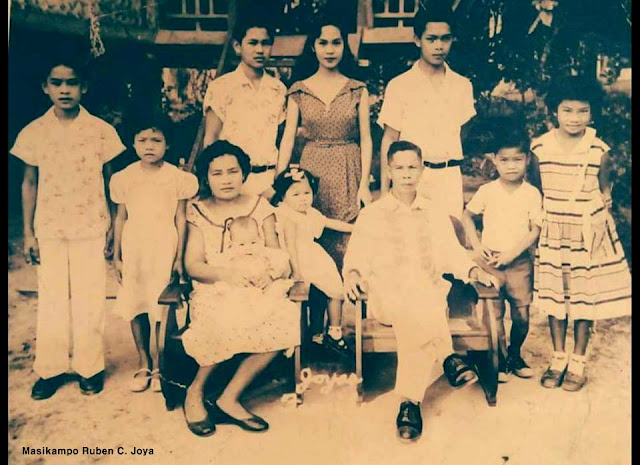
The Joya family stands as one of the surviving noble lines of the Tagbanua as direct descendants of the Masikampo lineage. Members of the family remain in Aborlan connected with the indigenous peoples of Southern Palawan. The late Ignacio "Ampun" Joya was the first born of Rafaela "Apo Pila" Cursod and Bantol Joya . He had a younger sister Quintera "Kimko" Joya who was married to the renowned Thomasite teacher John H. Finnigan . Aside from being the leader of the tribes, Ampun Joya was a teacher, a rancher and served as the town Mayor of Aborlan. He married Carmen Cojamco , a mixed Cuyuno-Tagbanwa, from Inagawan. They had 12 children and numerous grandchildren. The family lived in a place called "Kalampisaw"- a hilly area by the center of the town. Masikampo Ampun Joya donated lands to build the old municipal building and the Aborlan Catholic Church.

The Tagbanua Political Structure: Key Positions

Image
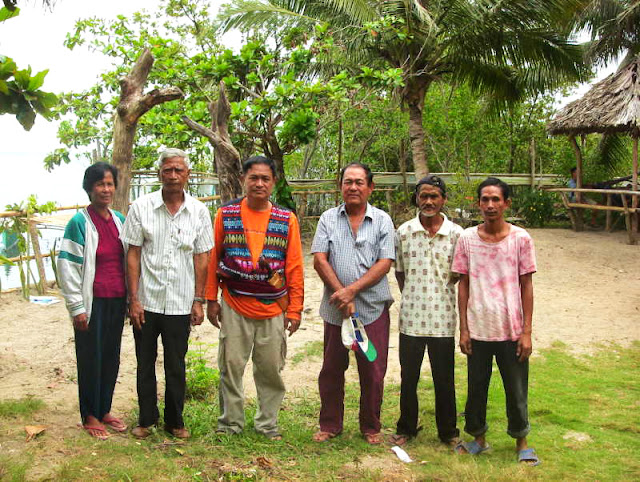
R-L: Descendants and usba et masikampo. Apo Iday, Apo Jim Kutat (d), Masikampo Ruben C. Joya, Maradia Teting Joya, another Usba from Cursod clan (unk), Apo Taham  Masicampo -A Masicampo is the primary leader among all the traditional leaders and other non Christian cultural communities whose authority extends throughout  mainland Palawan. -Considered as the patriarch of the IPs of Palawan, settling disputes, imposing tribal laws (adat), appointing traditional leaders (bageral), and solemnizing tribal marriages. - It is common belief among the Tagbanuas and Pala’wan of mainland Palawan that there shall be only one legitimate Masicampo of Palawan. To avoid conflicting views to the customary laws. - in case of death of a Masicampo or upon his incapacity, the elders among the clans of the Family with the Bloodline of Masicampo also called as the  Usba e’t Masicampo  will convene for the purpose of choosing among them who will be the next Masicampo. The Mas...

The Tagbanua Political Structure

Image
-A Masicampo is the primary leader among all the traditional leaders and other non Christian cultural communities whose authority extends throughout the mainland Palawan. -Considered as the patriarch of the IPs of Palawan, settling disputes, imposing tribal laws (adat), appointing traditional leaders (bageral), and solemnizing tribal marriages. - It is common belief among the Tagbanuas and Pala’wan of mainland Palawan that there shall be only one legitimate Masicampo of Palawan. To avoid conflicting views to the customary laws. - in case of death of a Masicampo or upon his incapacity, the elders among the clans of the Family with the Bloodline of Masicampo also called as the  Usba e’t Masicampo  will convene for the purpose of choosing among them who will be the next Masicampo. The Masicampo will be chosen by a consensus of the  Usba e’t Masicampo -  the council of the elders of the clan . Women, youngsters and non members of the family are prohibited to ...

The Masikampo

Image
        Palawan is the home of eight cultural minorities Tao’t Bato (ke’ney), Batac, Pala’wan, Molbog, Mapun, Tausug and Panimusan with diversified customs, traditions, idiosyncrasies and lifestyles. Before the arrival of the Spaniards, Palawan was under the dominion of the Sultan of Sulu and Borneo who continued to hold sovereignty over the southern part of Palawan until the 19th century making Aborlan a sultanate of Sulu. A political structure formed the government of the early Tagbanuas. The Sultan was represented by a “Masicampo”, the highest ranking tribal leader or the chieftain. He was chosen from a lineage of “Masicampo”, from a particular bloodline. The whole native populace was under his rule. Everybody ran to him for problem-solving, decision making and many other cases. He also appoint the “saribangsawan” and his panglima, maradja and their assistants. The Tagbanuas have distinct cultural customs and traditions acquired from the people of Sulu and Borneo...